
Beijing has been wary of Sanae Takaichi's efforts to boost Japan's military profile since taking office six months ago, points out Dr Rajaram Panda.

In the Indo-Pacific's new era -- where perception shapes reality faster than treaties -- the real entrapment is not of China or the United States. It is the test Japan has set for itself -- and whether partners like India, acting as balancers rather than accelerants, can help ensure that the story ends in stability, points out Varun Arya.
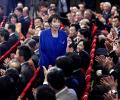
As a protege of Shinzo Abe, Takaichi is expected to scale bilateral ties much higher. Trade and investment shall grow. People-to-people contacts shall be scaled up, points out Dr Rajaram Panda.

There is nothing to be worried about as bilateral ties are robust with solid foundations. Both are on the same page on the economic and defence/security ties bilaterally and globally and that shall continue irrespective of change in political dispensation in either country, points out Dr Rajaram Panda.
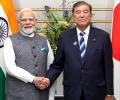
Prime Minister Shigeru Ishiba's sudden resignation after only a year in office has thrown Japan into political turmoil, raising doubts about how the country will handle economic and regional challenges, observes Dr Rajaram Panda.
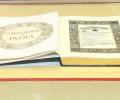
'The time has come to have a relook at the Constitution as every document has a shelf life.'

In a runoff between Kono Taro and Fumio to lead Japan's main ruling Liberal Democratic Party, Fumio was declared the winner and is assured to become Prime Minister next week.

'What lies at the core of Abe's stance is Japan's crisis management ability amid the increasingly tense North Korean situation,' says Rajaram Panda.

Shigeru Ishiba is expected to prioritise strengthening Japan's military capabilities and fostering deeper international partnerships, particularly with India, with whom Japan shares significant strategic interests, explains Dr Rajaram Panda.
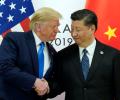
Trump spoke approvingly of his recent telephone conversation with Xi Jinping. This could indicate the possibility of America and China reaching some level of tactical accommodation, which would not be good news for India, points out Ambassador Shyam Saran, a former foreign secretary.

The impact of Shinzo Abe's towering personality is such that even in death, Abe remains a polarising figure, asserts Dr Rajaram Panda.

For the longest time, the court did not even hear important matters that the government did not want it to. Of late, it has begun to form benches. Meanwhile a lot of the damage has been done and continues to be done, asserts Aakar Patel.

In Tokyo, hundreds of Japanese citizens came out on the streets to express solidarity with the oppressed people of Tibet, Xinjiang, Mongolia, Hong Kong and Taiwan.

'There shall be no change in India-Japan ties,' predicts Rajaram Panda.

Political parties in India have received funds to the tune of Rs 4,895.6 crore between 2004 and 2012, and the irony is that 75 per cent of these funds cannot be traced.

'There will be much for President Trump and Prime Minister Modi to discuss including growing Chinese military cooperation with Pakistan, which heralds a new attempt by China and Pakistan to neutralise India's influence in its Indian Ocean neighbourhood,' notes Ambassador G Parthasarathy.

Some believe she should no longer be the face of the struggle to free Myanmar from the new military dictatorship, observes Prakash Bhandari.

The EU too urged Pak to ensure "safe and secure conditions" for the polls.

Defiant Thai protesters on Thursday cut power supply to the national police headquarters, ignoring a plea by beleaguered Prime Minister Yingluck Shinawatra to end their anti-government rallies and negotiate after she emerged unscathed from a no-confidence debate.

Modi today needs BJP CMs and non-party regional leaders to win votes and build alliances, but he will over-rule them and treat them like dirt once they have served their electoral purpose. Make no mistake: Modi is incurably authoritarian and will brook no dissent -- so long as the RSS is on board, says Praful Bidwai.

'Today, we being the majority pass a law and if the Opposition parties do not like it, they throw files at the Chair, and beat up women marshals.'

The issued rocked both houses of Parliament with the Opposition demanding Modi's statement on Trump's controversial remarks, holding that Kashmir is a bilateral issue and no third party can intervene.
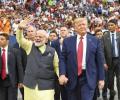
The Howdy Modi put a dagger into the heart of the 'bipartisan consensus' in the US regarding the relations with (Modi's) India, points out Ambassador M K Bhadrakumar.

It will not be to India's advantage to create misperceptions that it is bandwagoning with some Anglo-American project for regime change in Myanmar, argues Ambassador M K Bhadrakumar.

'He was always opposed to a form of nationalism that was narrow, selfish and arrogant.' 'He will always remain a beacon of inspiration for freedom-loving people across the world and for movements of resistance against oppressive State power.'

Donald Trump is believed to be the first US President or President-elect to have spoken to a Taiwanese leader since 1979, when the US severed diplomatic ties with Taiwan after its recognition of the People's Republic of China, points out former RA&W officer Jayadeva Ranade.

'This is a historic juncture when the US is in great need of an alliance with India to strengthen its hands in the fierce struggle with China in the Asian theatre,' points out Ambassador M K Bhadrakumar.
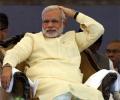
Prime Minister Narendra Modi is being accused of wrong things. His main problem is his view of himself, says T C A Srinivasa-Raghavan

A group of retired civil servants also called upon the PM to reach out to the families of the victims in Unnao and Kathua and "seek their forgiveness on behalf of all of us".

'As of now, it may be best for India to insist that Yameen honours the supreme court rulings and ensures that the next election is free and fair,' says Brigadier S K Chatterji (retd).
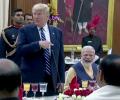
'Many said his visit was very risky. But mercifully, Air Force One has taken off from Delhi without Mr Trump stepping on anybody's toes,' notes Ambassador T P Sreenivasan.
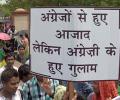
'In UP/Bihar there is no industry. There are no other jobs, you either herd cows, teach or join the IAS. The brightest go to the IITs. The rest go to arts college and they become IAS officers and it is this crowd that is now agitating.' 'English is the business language of the world, we have to accept that. If I had done my IIT in Hindi, I would be stuck in the cow belt without work.' IIT graduate, entrepreneur and politician R K Misra on the row over English in the UPSC prelims.

'Presidents may come and go, but America will go on forever,' an American business leader tells Ambassador T P Sreenivasan in New York.

'Our prime minister manifests a vision for India to be great and powerful, but the modernity required -- of thinking, attitudes, behaviour -- seems alien, if not abhorrent, to his constituency and associates,' says Ambassador K Shankar Bajpai.

By weakening Sharif, the corps commanders could have a final say in important matters like relations with India, dealing with Taliban militants, interacting with Americans and once again achieving strategic depth in post-NATO Afghanistan. Which is why they may be behind the unrest in Pakistan led by Imran Khan and Dr Tahirul Qadri, says Shahzad Raza.

Policy of continuity won't help India earn business or respect, says Pramod Kumar Buravalli.

'This is not a small change, it's a BIG change. People wanted to hear the voice of their PM. They can do so now. This is a big parivartan.'

PM Modi seems to be gradually ending India's strategic ambiguity

Here is the full transcript of Congress vice president and Lok Sabha poll campaign chief Rahul Gandhi's first formal TV interview with Times Now Editor-In-Chief Arnab Goswami.

'The year in pictures' treks across the globe, looking back on the moments that shaped 2016. From the United States presidential race, to demonetisation in India to the refugee crisis, the news has kept pouring in. Here are our top 50 moments from the world.
 © 2026 Rediff.com - Advertise with us - Disclaimer - Privacy Policy - Sitemap - Feedback - About us - Terms of use - Grievances